
If you are a pet parent and seeing your pet with matted fur, then having a worry is quite natural for you. Matted fur not only damages the inner skin coat, but also hardens the process of grooming and looks of your pet. It gives an ugly appearance to your pet and no pet owner wants to see his/her pet in such a way.
From health conditions to the cuteness of your furry friend, skin coat matters most. But most of us are unaware of the causes of matted fur. The primary step to avoid matted fur is by knowing and understanding its causes. In this article, we will uncover the 6 main causes of mats in your pet with their prevention from a vet’s point of view.
Why does healthy fur matter?
Your pet’s coat is a protective barrier between the internal body and external environment. It protects the pet from sunburn, lessens the risks of injuries and also prevents it from irritation caused by Environmental factors like dust, allergens and extreme weather conditions. It also regulates the body temperature, by acting as insulation during winter and allows airflow to the skin in summer.
A healthy Fur also reduces the chances of parasites like fleas to grow. With healthy fur, pets feel more comfortable and groom themselves without pain or itching caused by tangled mats.
1. Lack of regular grooming
The most common cause of matting in pets is skipping the regular grooming sessions. Dogs and cats that have long hair are, when shed hair are more vulnerable to matted fur. The reason is upon shedding, the broken hair tangles with others to form a cluster. This cluster of hair gets strong and hair gets matted.
Preventive measures:
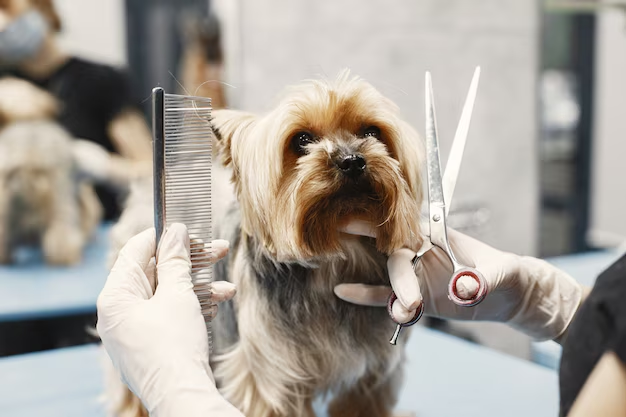
Once a pet builds matted hair, the condition is unavoidable with just regular grooming. That is why Vets insist on regular hair grooming for early detection of mats, as it prevents serious conditions like severe pain , infections and parasitic hosting spots. Regular grooming is the ultimate step a pet parent takes to avoid matted fur condition. Otherwise, what begins as a small tangle quickly changes into matted fur that will be more difficult to deal with.
2. Environmental factors.
Moisture is another leading factor contributing to matted fur. Our pets are always up for outdoor activities, but when they come home, they are accompanied by dirt, by rolling in grass, with wet hair. Wet hairs are more easy to get tangled and if combined with dirt, abruptly( within 2-3 hours) build mats in their hair.
Preventive measures:
We can’t stop pets from outdoor activities as they are best for nourishment. But we can clean the dirt and dry the hair after they return home. Try to groom your pet daily if possible, otherwise grooming 3 to 4 times a week is not an option. Giving them a bath after their outdoor trip with pet safe shampoo and conditioner will remove the dirt and sticky substances from the hair and lessen the risks of matting.
3. Friction from hair, harnesses and collars.
Pet’s collars and harness collide continuously with hair beneath them, causing friction. Continuous rubbing under the neck, shoulder or even under the clothes causes the hair to get tangled. These mats are most likely present behind the ear, under the arms or even between the legs. As these are less eye catchy areas, and often go unnoticed by pet owners till a tight mat develops and causes pain to the pet.
Preventive measures:
Take off your pet’s collar and harness during relaxation time, especially at home. This will help pets get relaxed and the coat will be free from friction. You can also use soft and comfy collars and harnesses for your pet that touch smoothly with the pet’s hair, causing less matting.
4. Seasonal shedding and Loose undercoat.
During seasonal changes, some breeds of pets like huskies, golden retrievers, and persians shed their undercoat for adapting to change for temperatures. They have a thick undercoat, which upon shedding mixes with the above coat to form tangles. These tangles when left unremoved convert into dense mats.
Preventive measures:
To avoid this condition, you need to do frequent grooming during the shedding seasons. Use De-shedding tools and undercoat rakes, that are specially designed to penetrate the undercoat of your pet, and remove the dead hair before the tangle. Many pet parents observe that increasing the frequency of grooming during the shedding season helps prevent mats.
5. Health issues and age related changes:
Senior pets feel it more loaded work to groom themselves, because of less energy and mobility issues as well. This makes them more vulnerable to matting as they are not doing their part to groom themselves properly. Older pets suffering from arthritis and other health issues also lose interest in grooming.
Preventive measures:
In this case, they are totally dependent on you to groom them, by using the right tools
6. Not using the right tools and techniques:
Most of the pet owners think that they are grooming their pets in the best way. But not using the right tools and techniques will promote matting. For example, most of us do surface level brushing of our pets, while fully ignoring the undercoat. This causes the underneath dead hair to get sticky with hair on the surface to form mats.
Preventive measures:
You need to invest in the right tools, to save your pet from matted fur condition. Using the right techniques like doing an in-depth coat grooming is your only way to keep your pet away from mats.
Conclusion:
None of us want to keep our furry friends with matted coats, but things do not go the way we want. They go the way we plan them. Using the right ways and tools for grooming will definitely work out for your pet, and will also save you some professional grooming visits. Keep in mind the most common causes of matted fur, and use their counterparts as mentioned above to help your pet nourish and grow without pain and distress.


Leave a Reply