
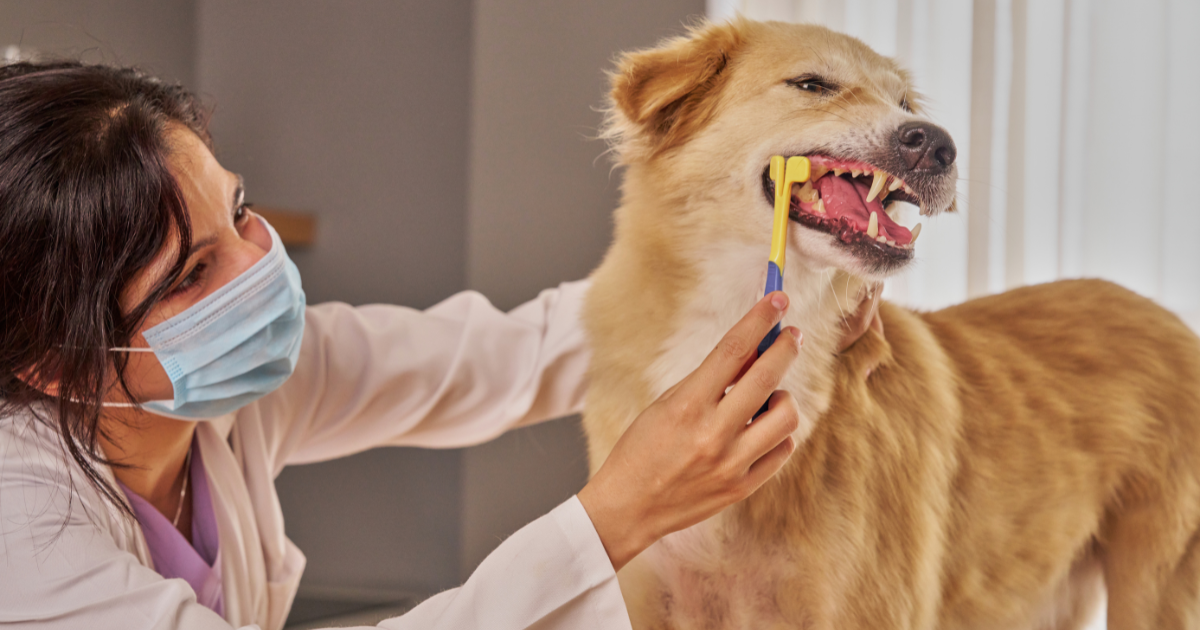

Imagine that, you have not brushed your teeth for weeks, have bad breathing, plaque build-up on teeth, and have an oral distress all the time. Surely, none of us is even willing to imagine it. Now, think of your furry friend, who is totally dependent on you for its dental care. Not brushing your pet’s teeth for a long time leads to the same bad experiences for him and it will entirely be up to you.
Our responsible parents made our early age habit of brushing teeth twice a day, no matter what. Now being a responsible pet parent, it is our responsibility to brush our pet’s teeth on a suitable schedule. In this blog, we will answer your query of how often a pet needs a tooth brush in a week to maintain good dental health, that will have a positive impact on your pet’s overall well-being.
Why brushing your pet teeth is important for your pet:
If you are not properly looking after your pet’s oral condition, then, it can cause them severe health related issues. When your pet eats food, the food particles together with saliva, make a sticky layer of plaque on teeth. The plaque is full of bacterias that can cause harm to the oral cavity which further leads to dental diseases. If left on teeth, the plaque will get hard with time and convert into tartar. Tartar can not be removed by regular brushing and will need professional cleaning.
Improper dental care can cause oral( periodontal diseases) as well as other health diseases. Scientific studies show that dogs with the age of 3 years are 80% to 90% more likely to have symptoms of periodontal diseases. While 70% of cats over the age of 3 years also develop some sort of periodontal diseases. This can only be avoided with proper brushing and dental care.
How often you need to brush your pet’s teeth:
It is recommended by dental experts that your pet needs a minimum of 3 to 4 times proper brushing per week, to avoid any oral condition. With regular dental care at home, you should also take your pet to a clinic for professional dental cleaning once or twice in a year, to prevent any serious and hidden oral disease.
Keep in mind, plaque needs 48 to 72 hours to get hardened into tartar.
Benefits of brushing your pets teeth:
Oral benefits:
- Food particles combine with saliva to make a hard layer of tartar on teeth. Brushing your pet’s teeth prevents plaque and tartar build-up.
- Gingivitis and other periodontal diseases are most common in pets, while regular dental care is the basic check to prevent these diseases.
- Bacterial plaque is the one source of bad breath, because these bacteria start to digest the food particles, releasing VSCS such as hydrogen sulfide( H₂S) and methyl mercaptan (CH₃SH). These chemicals cause bad breath in pets. Brushing removes the food particles and prevents the release of these chemicals.
- It also gives your pet strong teeth and healthy gums, by removing the substances that can cause pain or even tooth loss.
Other body benefits:
- Bacteria under the gum of your pet’s teeth can enter the bloodstream and also affect the internal organs like heart, liver and kidney. Brushing kills these bacterias and helps prevent them from entering the bloodstream.
- Pets with strong and clean teeth are more likely to eat and chew comfortably without facing any discomfort.
Common mistakes not to repeat while brushing your pets teeth:
Using human toothpaste:
One of the most common mistakes, that almost every pet parent does, is to use human toothpaste for pet’s teeth brushing. It has Xylitol and fluoride that are toxic to pets and can cause serious health issues. So, make sure that the toothpaste is vet-approved and meets the demands of your pet’s oral health.
Aggressive and inconsistent brushing:
Aggressively brushing your pet damages the gums of and makes them uncomfortable with the process. This will let them oppose the future sessions.
Brushing your pet’s teeth without a regular weekly schedule will weaken their already established habit and also allows the plaque to get converted into tartar due to inconsistent timing.
Not starting with early age of your pet:
Most of the pet parents think that their pet is too young for a bushing session. While, in reality, that is not the case. Establishing an early habit of brushing will make them more familiar with the process and become more adoptive to it.
Conclusion:
Brushing your pet’s teeth was never about a fresh breath, but it is an important step in preventing the issues that your pet may face without it. Consistent brushing weakens the plaque formation and helps remove the tartar on teeth. Along with regular brushing at home, your pet also needs professional cleaning for early detection of diseases. A loving pet parent always has few minutes for his pet ( brushing) to keep them healthy and save them from oral diseases.


Leave a Reply